
Huginn & Muninn: Odin’s Ravens, Memory & Thought
Huginn and Muninn are some of my favorite symbols to tattoo because they carry so much depth without needing a single word to explain themselves. In the Eddas, Odin sends his ravens out each day to fly across the world and return with everything they’ve seen and heard. “Huginn” means thought, and “Muninn” means memory or mind, and together they represent the way we learn from experience, intuition, and reflection. These aren’t just birds — they’re extensions of consciousness, messengers between the inner world and the outer world, and reminders that wisdom is something you gather through living, observing, and paying attention.
In tattoo work, people choose Huginn and Muninn when they’re stepping into a more intentional phase of life — trusting their instincts, honoring their past, or reconnecting with their inner voice. They’re perfect symbols for anyone who’s been through something heavy and come out with a clearer sense of self, or for people who feel drawn to Odin as a seeker, wanderer, and collector of knowledge. The ravens flow beautifully across the chest, back, ribs, upper arms, or as part of a larger Norse sleeve. Whether done in blackwork, geometric lines, or saga-inspired shading, Huginn and Muninn remind us that our thoughts and our memories shape the paths we walk.
Huginn & Muninn: The Ravens Who Carry the Mind of a God
If you’ve ever felt drawn to ravens in Norse mythology, it’s almost always because of Huginn and Muninn. Odin’s two ravens are more than birds — they are extensions of his consciousness. They travel the world each day, gather information, and return to sit on his shoulders and speak into his ear.
Odin isn’t omniscient. He relies on them to see what he cannot.
And that’s where the real meaning of these tattoos begins.
At their core, Huginn and Muninn represent:
The mind
Memory
Intuition
Thought
Awareness
Perspective
The ability to see beyond your current state
And for many people, they become symbols of introspection, recovery, transformation, and mental clarity.
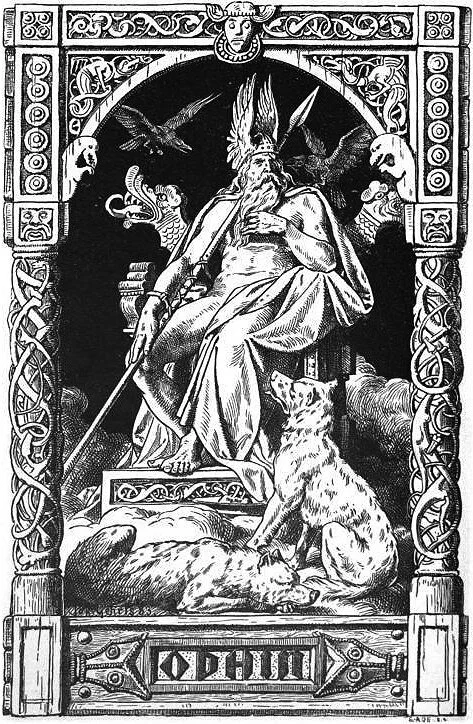
Always Watching..
Odin sends his ravens out each day to fly across the world and return with everything they’ve seen and heard. These aren’t just birds — they’re extensions of consciousness, messengers between the inner world and the outer world, and reminders that wisdom is something you gather through living, observing, and paying attention.
Where the Ravens Come From in the Sources
Huginn (“thought”) and Muninn (“memory” or “mindfulness”) appear in both Eddas.
In Grímnismál, Odin says:
“Huginn and Muninn
fly each day
over the wide world.
I fear for Huginn,
that he will not return,
but more I fear for Muninn.”
(Poetic Edda)
This line hits many people deeply.
It’s Odin — a god — admitting vulnerability.
He fears losing his memory more than his thoughts.
That human honesty is part of why these ravens resonate so strongly in tattoo form.
Symbolic Meanings Behind Huginn & Muninn Tattoos
Each raven carries its own weight. When someone chooses them as a tattoo, it’s almost always tied to their internal life.
Thought (Huginn)
Representing:
Mental clarity
Logic
Inspiration
Strategy
Conscious decision-making
Investigation and curiosity
Huginn tattoos often appeal to thinkers, planners, leaders, and people who’ve fought hard to regain control of their mind.
Memory (Muninn)
Representing:
The past
Trauma acknowledged
Ancestry
Loss and remembrance
The subconscious
Dreams, intuition, and emotional intelligence
Muninn tattoos often carry memorial weight, grounding someone to their roots or honoring a piece of life they refuse to forget.
Together
Huginn + Muninn = a whole, balanced mind.
Thought + memory.
Logic + intuition.
Future + past.
Head + heart.
To gether they represent a complete self.
Why People Choose Raven Tattoos in Norse Symbolism
You’d be surprised how often people who have survived something difficult reach for raven symbolism. Ravens are survivors. They’re intelligent, strategic, adaptable, and deeply social.
In the Norse worldview, they weren’t symbols of doom — they were messengers, watchers, and guides.
A Huginn & Muninn tattoo is often chosen by someone who has:
Reclaimed their mind after struggle
Survived grief or trauma
Started therapy or recovery
Lost someone important
Rebuilt themselves
Accepted both the light and shadow inside them
Ravens aren’t just “cool birds” — they’re mirrors of the self.
Design Approaches for Huginn & Muninn Tattoos
There are many ways to approach these ravens depending on your story. Here are the styles clients most often request.
Symmetrical Ravens (Facing Each Other)
One representing thought
The other memory
Often placed on the upper back, chest, or shoulders
Creates strong visual balance
Ravens Flying Outward from the Center
One on each side of the chest, wings spreading outward.
Represents exploration, expansion, new horizons.
Perched Ravens, One on Each Shoulder
Like Odin’s own depiction.
Great for storytelling pieces and for people who want subtle symbolism.
Huginn & Muninn with Valknut
The Valknut represents fate, death, and Odin’s warrior connection.
Ravens layered next to or around a Valknut create a powerful cosmic-triad theme.
Ravens with Yggdrasil
A deeply mythological composition:
Ravens at the branches, tree at the center, roots grounding the wearer.
Blackwork Ravens with Rune Accents
Runes like:
Ansuz (Odin)
Kenaz (illumination)
Mannaz (self)
Laguz (intuition)
These pair beautifully with raven symbolism.
Realistic Ravens with Subtle Norse Elements
Traditional ravens rendered in realism or illustrative style, with small runic or knotwork details woven in.
Full Sleeve Raven Saga
Ravens flying over Jörmungandr, Yggdrasil, or a Viking ship scene.
This is where ravens become part of a larger mythic story.
What Huginn & Muninn Mean in Tattoo Form (Human Level)
This symbol resonates differently for each person, but the themes that show up most often when I talk with clients are:
“I’ve fought hard for my mind.”
“I’m reclaiming who I am.”
“I need clarity in my life.”
“I’m honoring someone I lost.”
“I’m remembering where I come from.”
“I’m learning to trust my intuition.”
“I’m connected to Odin’s path.”
“I want a symbol that represents both sides of me.”
That’s why these ravens continue to be one of the most meaningful Nordic tattoo choices today.
Placement Suggestions
Upper chest
Shoulders (like Odin)
Upper back (mirrored)
Forearms (one on each)
Side ribs
Thighs
Integrated into sleeves
Behind the ear (minimalist version)
===========================================
Sources & Citations
Primary Sources
Poetic Edda, Grímnismál — Huginn and Muninn’s daily flight
Prose Edda (Snorri Sturluson), Gylfaginning — additional raven references
Academic Commentary
Lindow, John — Norse Mythology: A Guide to Gods, Heroes, Rituals, and Beliefs
Simek, Rudolf — Dictionary of Northern Mythology
Davidson, H.R. Ellis — Gods and Myths of Northern Europe
Price, Neil — The Viking Way
Cultural Insight
University of Iceland — Old Norse literature and folklore programs
Jackson Crawford, PhD — multimedia academic commentary on Huginn & Muninn
===========================================
Author Bio - Jon Poulson, Ancient Marks
Jon Poulson is the founder of Ancient Marks, and one of the few tattoo artists in North America specializing in historically grounded Norse, Celtic, and ancestral tattoo styles. With over 20 years of experience in this style, Jon creates custom story-driven designs rooted in authentic symbolism, cultural respect, and artistic excellence. Clients travel nationally for Nordic-inspired work, bind-runes, and large-scale, geometric inspired and Tribal style tattoos.
