
Fenrir: The Bound Wolf & the Meaning Behind Norse Wolf Tattoos
Fenrir is one of those symbols that doesn’t pretend to be gentle. In the myths, he’s the monstrous wolf prophesied to kill Odin at Ragnarök, bound by the gods with a ribbon forged from impossible things—like the sound of a cat’s footsteps and the roots of a mountain—because they’re afraid of what he’ll become. Underneath all of that, though, is a story about fear, control, and what happens when power is chained instead of understood. Fenrir represents raw potential, rage, betrayal, and the side of us that refuses to stay small just to keep other people comfortable. That’s why people drawn to Fenrir tattoos often have a history of being underestimated, contained, or pushed aside—and they’ve reached a point where that version of their story is over.
In tattoo form, Fenrir can be a symbol of breaking bonds, surviving what was meant to hold you down, and refusing to be defined by other people’s fear. Some clients connect to him as pure chaos, others as a guardian wolf, and others as the part of themselves they used to be ashamed of but now claim fully. He works beautifully as a full-sleeve anchor, a dynamic rib piece, a chest or back wolf, or integrated into a larger Ragnarök or Odin composition. Whether done in heavy blackwork, illustrative realism, or stylized Norse-inspired linework, Fenrir is for people who are done apologizing for their strength—and ready to own the wild, honest parts of who they are.
Fenrir: The Wolf Who Could Not Be Contained
Few symbols in Norse mythology hit as hard as Fenrir — the massive wolf destined to break his chains and devour Odin at Ragnarök. For many people, Fenrir isn’t a symbol of destruction or villainy. He represents power that can’t be controlled, truths that refuse to stay buried, and the parts of ourselves that refuse to be tamed.
Fenrir draws people who have lived through struggle and came out the other side unbroken — whether the world wanted that or not.
This article dives deep into the myth, the symbolism, the psychology, and the tattoo applications that make Fenrir one of the most meaningful figures you can put on your skin.
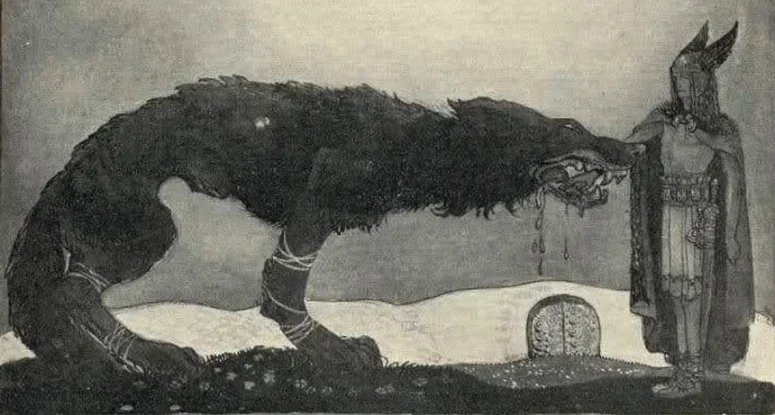
Who Is Fenrir?
Fenrir is the son of:
Loki (father)
Angrboða (a giantess of the Ironwood)
He is the brother of:
Jörmungandr (the World Serpent)
Hel (ruler of the underworld)
That family lineup alone tells you he’s tied to primal forces and cosmic purpose.
In the Norse texts, Fenrir is raised among the gods — but his power grows so rapidly that the Aesir fear him. They eventually attempt to bind him, leading to the most iconic and emotionally complex moment in his story.
This is where the symbolism truly begins.
The Binding of Fenrir
The gods try three times to bind Fenrir.
First Chain: Lœðing
He breaks it easily.
Second Chain: Drómi
He breaks it as well — even more violently.
At this point, the gods panic. They’re terrified that Fenrir will become unstoppable. But instead of treating him with honesty, they choose deception.
Third Chain: Gleipnir
Gleipnir is made by the dwarves out of six impossible things:
The sound of a cat’s footsteps
A woman’s beard
The roots of a mountain
A bear’s sinews
A fish’s breath
And the spittle of a bird
Thin as a ribbon, stronger than anything ever forged.
Fenrir senses the trick and refuses to be bound unless one god places their hand in his mouth as a sign of good faith. Tyr, the god of honor and law, agrees.
Fenrir is bound.
He struggles.
He realizes he’s been betrayed.
He bites off Tyr’s hand.
This moment is one of the most emotionally intense stories in the Eddas.
It’s not about “good vs evil.” It’s about:
Trust
Betrayal
Power
Fate
Fear
The consequences of trying to control what should not be controlled
This is why Fenrir means so much to people today.
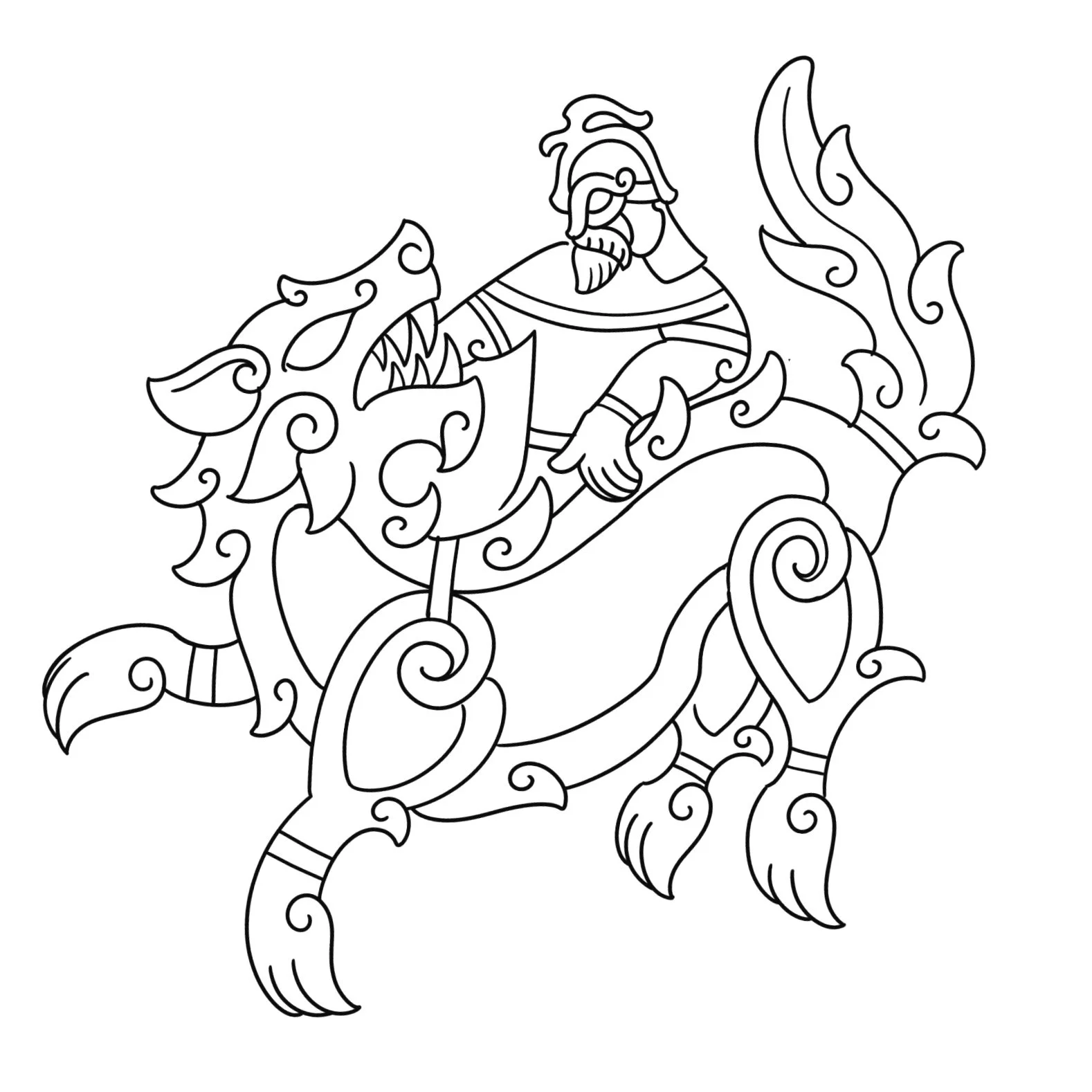
Fenrir and Tyr
Beside is a tattoo drawing by Jon Poulson. This one is on a great client, but we can design yours to fit
What Fenrir Represents Symbolically
Fenrir is a symbol of unrestrained power, but also of the cost of betrayal and the inevitability of fate. His myth is less about destruction and more about the consequences of dishonesty and fear.
People who choose Fenrir tattoos tend to resonate with themes like:
Breaking Free
Fenrir’s destiny is to break his chains at Ragnarök.
This resonates with people who have:
Overcome abuse
Survived trauma
Been controlled or silenced
Escaped toxic cycles
Reclaimed their identity
He’s a symbol of liberation.
Personal Power
Fenrir is pure, unapologetic force. No masks. No shame. No pretending to be smaller for someone else’s comfort.
Many people choose him as a symbol of inner strength they refuse to hide anymore.
Betrayal & Trust
The story of losing Tyr’s hand is, at its core, a story of broken trust.
Fenrir tattoos can represent:
Healing from betrayal
Trusting yourself above all
Honoring scars — emotional or literal
Chaos, but not evil
Chaos is not villainy.
Chaos is the force that breaks stagnation.
Fenrir reminds people that destruction sometimes clears the way for rebirth.
Facing destiny head-on
Fenrir embraces his fate.
He doesn’t run from it.
He meets the gods in open conflict at the end of the world.
This resonates strongly with people facing their own turning points.
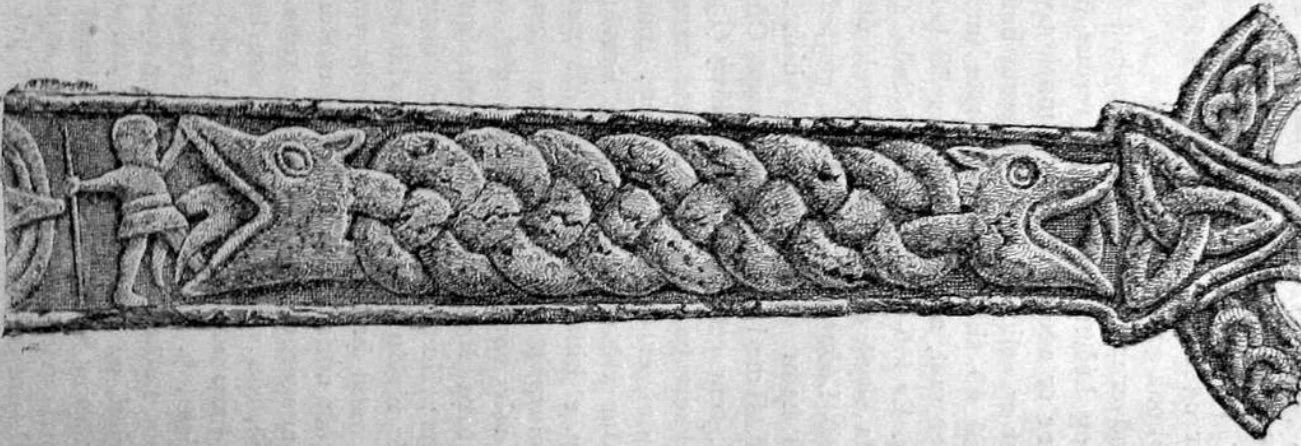
Part of the the Gosforth Cross showing a humanoid figure tear apart the jaws of a monster. Usually interpreted to be Víðarr's battle with Fenrir at Ragnarök.
Fenrir in Ragnarök
During Ragnarök:
Fenrir breaks free from Gleipnir
He charges into the battle
He swallows Odin
He is eventually slain by Vidar
This isn’t a story of triumph or tragedy — it’s a story of balance.
Nothing in Norse mythology is eternal.
Everything has a cycle.
Even the gods.
Even fate.
Even death.
Fenrir plays his role fully and without shame — and that alone makes him a symbol of authenticity.
Fenrir Tattoos: Style & Design Ideas
There are countless ways to approach a Fenrir tattoo, but the best designs always connect to the story you want to tell.
The Bound Wolf (Symbol of Oppression & Survival)
Fenrir wrapped in Gleipnir, straining against the magical ribbon.
This tattoo is about:
Trauma survived
Strength found in captivity
Power that refuses to die
Often placed on:
Forearm
Ribs
Thigh
Shoulder
Fenrir Breaking His Chains (Rebirth & Liberation)
The moment of release — jaws open, chains snapping, power unleashed.
This is one of the strongest symbols for people overcoming:
Toxic relationships
Addiction
Old identities
Self-doubt
Childhood trauma
Fenrir Devouring Odin (Fate & Defiance)
A more mythic, narrative piece.
Can be part of an entire Ragnarök sleeve or back piece.
Fenrir with Tyr’s Hand (Trust & Betrayal)
Not always literal — sometimes symbolized by a missing hand, blood, or Tyr’s rune (Tiwaz).
Fenrir + Moon Imagery
Some see Fenrir as connected to lunar cycles or emotional cycles — especially those healing from deep emotional wounds.
Fenrir with Valknut
A powerful Odin connection piece.
Fenrir inside a Jörmungandr Circle
Two of Loki’s children in one design:
Chaos + cycles + protection.
Blackwork, Norse Knotwork, or Hybrid Styles
Fenrir can be rendered in:
Heavy blackwork
Nordic knotwork
Dotwork
Illustrative realism
Or hybrid Norse-modern styles
Each approach tells a different story.
Who Gets Fenrir Tattoos?
In the studio, Fenrir often comes up in consults with people who’ve been through real shit — and survived.
People who choose Fenrir tend to be:
Trauma survivors
People recovering from addiction
Those escaping control or manipulation
People reclaiming their identity
Individuals rediscovering their power
People honoring their rage, strength, or rebirth
Those who’ve been underestimated their whole lives
Fenrir becomes a reminder that being “too much” is often exactly what you needed to survive.
Placement Ideas
Ribs (powerful and personal)
Full upper arm
Back (ideal for full mythic scenes)
Forearm
Thigh
Chest (breaking free over the heart)
Integrated into a Norse sleeve
===========================================
Sources & Citations
Primary Sources
Poetic Edda, Völuspá, Vafþrúðnismál — Fenrir’s origins, Ragnarök role
Prose Edda, Snorri Sturluson — Gylfaginning (main account of Fenrir’s binding and fate)
Academic Commentary
Lindow, John — Norse Mythology: A Guide to Gods, Heroes, Rituals, and Beliefs
Simek, Rudolf — Dictionary of Northern Mythology
Davidson, H.R. Ellis — Gods and Myths of Northern Europe
Price, Neil — The Viking Way: Magic and Mind in Late Iron Age Scandinavia
Cultural & Historical Notes
University of Iceland — Old Norse literature and mythology studies
Jackson Crawford, PhD — translations and commentary on Fenrir-related texts
===========================================
Author Bio - Jon Poulson, Ancient Marks
Jon Poulson is the founder of Ancient Marks, and one of the few tattoo artists in North America specializing in historically grounded Norse, Celtic, and ancestral tattoo styles. With over 20 years of experience in this style, Jon creates custom story-driven designs rooted in authentic symbolism, cultural respect, and artistic excellence. Clients travel nationally for Nordic-inspired work, bind-runes, and large-scale, geometric inspired and Tribal style tattoos.
